
Regulations and guidelines to ensure the safe handling and use of chemicals are vital in protecting both people and the environment from potential hazards associated with chemical usage. From the workplace to our homes, the safe management of chemicals plays a crucial role in maintaining health and safety standards. This overview will delve into the essential aspects of chemical regulations, highlighting the importance of compliance and best practices.
Understanding the framework of chemical safety regulations helps organizations navigate the complexities of compliance while ensuring that their employees are well-informed and equipped to handle chemicals safely. By exploring various regulatory bodies, types of regulations, and guidelines for safe handling, we can collectively work towards a safer world.
Introduction to Chemical Regulations
The chemical industry plays a crucial role in our daily lives, providing the materials necessary for everything from pharmaceuticals to household products. However, the handling and use of chemicals come with inherent risks, which is why regulations are essential to ensure safety and environmental protection. Without these regulations, the potential for accidents, toxic exposure, and environmental damage could increase significantly.In response to these risks, several key international agreements and frameworks have been established to guide the safe handling of chemicals.
These agreements create a common understanding among nations regarding the management of chemical substances. They provide guidelines and standards that countries can adapt to their own national regulations, ensuring a cohesive approach to chemical safety worldwide.
Key International Agreements on Chemical Safety
Numerous international agreements have shaped the landscape of chemical safety, establishing principles that promote responsible management. Some notable agreements include:
- The Stockholm Convention: Focuses on eliminating or reducing the release of persistent organic pollutants (POPs) into the environment.
- The Rotterdam Convention: Aims to promote shared responsibilities in relation to the importation of hazardous chemicals and pesticides.
- The Basel Convention: Addresses the control of transboundary movements of hazardous wastes and their disposal to protect human health and the environment.
- The Globally Harmonized System (GHS): Provides a framework for classifying and labeling chemicals based on their hazards, enhancing safety communication.
These agreements set the framework for how chemicals are produced, used, and disposed of, helping to prevent accidents and protect communities.
Roles of Government Agencies in Regulating Chemical Usage
Government agencies play a vital role in enforcing chemical regulations and ensuring compliance. Their responsibilities often include:
- Monitoring and Enforcement: Agencies like the Environmental Protection Agency (EPA) in the United States ensure that companies adhere to safety regulations by conducting inspections and evaluating compliance.
- Risk Assessment: Agencies assess the potential risks associated with chemical substances, providing critical data that informs regulatory decisions.
- Public Health Promotion: Agencies develop educational programs and resources to inform the public and industries about safe chemical practices.
- Research and Development: Government agencies often collaborate with scientific organizations to advance research on chemical safety and new technologies for safer chemical handling.
Through these actions, government agencies help maintain a balance between the benefits of chemical use and the need for safety and environmental protection.
“Chemical safety is not merely a regulatory requirement; it is a commitment to protect human health and the environment for future generations.”
Types of Chemical Regulations
Chemical regulations play a crucial role in ensuring the safe handling and use of chemicals across various sectors. These regulations are designed to protect not only the environment but also the health and safety of workers and the general public. Different categories of chemical regulations are established to address specific concerns related to chemical substances and their applications.The significance of regulations such as the Occupational Safety and Health Administration (OSHA), the Environmental Protection Agency (EPA), and the Registration, Evaluation, Authorization and Restriction of Chemicals (REACH) cannot be overstated.
These regulations set standards for safe practices and compliance requirements that industries must follow, ensuring a comprehensive approach to chemical safety and environmental protection.
Categories of Chemical Regulations
Understanding the various categories of chemical regulations helps in grasping their implications for both industries and individuals. Here are some key categories:
- Environmental Regulations: These regulations are focused on protecting the environment from harmful chemicals. The EPA is a principal body in the United States that oversees environmental regulations, ensuring that chemicals do not adversely affect air, water, and soil quality.
- Occupational Safety Regulations: OSHA is responsible for ensuring worker safety in environments where chemicals are used. This includes setting permissible exposure limits and requiring proper labeling and safety data sheets for hazardous substances.
- Chemical Inventory Regulations: These regulations require businesses to maintain an accurate inventory of chemicals on-site. They help in tracking hazardous materials and ensuring compliance with local and national safety standards.
- Transportation Regulations: Regulations surrounding the transportation of chemicals, including those set by the Department of Transportation (DOT), ensure safe handling and shipment of hazardous materials across various modes of transport.
- International Regulations: Various treaties and agreements, such as REACH in the European Union, focus on the safe use and management of chemicals globally, emphasizing the need for registration and evaluation of chemical substances before they can be marketed.
The variations in regulations across different regions or countries often arise from local environmental priorities, economic considerations, and public health concerns. For instance, REACH imposes stringent requirements on chemical manufacturers in the EU, while the approach in the U.S. may differ in terms of compliance and enforcement strategies. Understanding these differences is essential for businesses operating in multiple jurisdictions, as they must navigate a complex regulatory landscape to ensure compliance and safety.
Guidelines for Safe Chemical Handling
When working with chemicals in any capacity, safety must be the top priority. Proper handling techniques, appropriate personal protective equipment (PPE), and effective storage and labeling practices are essential to minimize risks and ensure the safety of all individuals in the workplace. Following guidelines helps prevent accidents, exposures, and spills, thereby fostering a safer working environment.
To ensure safe handling of chemicals, it is vital to adhere to specific protocols and to utilize the correct equipment. The following sections detail a comprehensive checklist for safe handling, Artikel the required PPE based on the types of chemicals in use, and provide best practices for labeling and storing chemicals securely.
Checklist for Safe Chemical Handling Procedures
Implementing a checklist can help reinforce safe handling protocols for chemicals. The following points should be regularly reviewed and updated to reflect current practices and materials in use:
- Read Safety Data Sheets (SDS) for each chemical before use.
- Wear appropriate PPE at all times, including gloves, goggles, and lab coats.
- Utilize fume hoods or other ventilation systems when necessary.
- Ensure all chemicals are clearly labeled with their contents and hazards.
- Keep workspaces tidy and free from spills or clutter.
- Store incompatible chemicals separately to avoid reactions.
- Use proper containment methods for transporting chemicals.
- Dispose of chemical waste according to local regulations.
Personal Protective Equipment (PPE) Requirements Based on Chemical Types
Selecting the correct PPE is crucial for protecting workers from chemical hazards. The type of chemical determines the necessary protective gear. Below are typical PPE recommendations based on common chemical categories:
- Corrosives: Acid-resistant gloves, goggles, and face shields are essential to prevent skin and eye contact.
- Flammables: Use flame-resistant lab coats, non-flammable gloves, and safety goggles for protection during handling.
- Oxidizers: Chemical-resistant gloves and goggles should be worn to protect against potential reactions.
- Toxins: Respirators, chemical-resistant gloves, and full-face shields are recommended to limit exposure.
Best Practices for Labeling and Storing Chemicals Safely
Proper labeling and storage of chemicals are crucial steps in preventing accidents and ensuring clear communication regarding hazards. Here are best practices to follow:
- Each container must have a visible label indicating the chemical name, concentration, hazard symbols, and relevant warnings.
- Utilize color-coded labels to quickly convey hazard levels, enhancing visual recognition.
- Store chemicals in designated areas that are well-ventilated, dry, and away from direct sunlight.
- Implement secondary containment systems such as spill trays or bunds to contain leaks and spills.
- Regularly inspect stored chemicals for any signs of leakage, deterioration, or improper storage conditions.
Risk Assessment and Management
Assessing and managing risks associated with chemical handling is crucial in ensuring workplace safety and environmental protection. A thorough risk assessment can help identify potential hazards, evaluate the likelihood of incidents, and determine their potential consequences. This process is essential for developing effective risk management strategies that minimize exposure to harmful chemicals.Conducting a chemical risk assessment involves systematic steps that allow organizations to evaluate the risks posed by hazardous substances.
The process typically includes identifying the chemicals in use, evaluating their properties and risks, and estimating the potential impact on human health and the environment.
Methods for Conducting Chemical Risk Assessments
Several methods are employed to conduct chemical risk assessments, providing a structured approach to identifying and evaluating risks. Key techniques include:
- Qualitative Assessments: This method involves subjective analysis based on expert judgment and available data. It is useful for initial screening of chemicals where detailed data may not be available.
- Quantitative Assessments: Involves numerical estimates of the likelihood and consequences of exposure to chemicals, often utilizing models and empirical data to predict outcomes.
- Benchmarking: Comparing the chemical’s risk profile against established standards or guidelines can help to understand its relative safety.
- Scenario Analysis: This technique involves exploring various scenarios of chemical use and potential incidents, allowing for a deeper understanding of risk exposure.
Assessing chemical risks is not a one-time event but a continuous process that evolves with new information and changing conditions. It requires regular audits, training, and updates to ensure the assessment remains relevant and effective.
Developing Risk Management Strategies for Hazardous Chemicals
The development of risk management strategies involves a comprehensive process aimed at mitigating identified risks. This process can be summarized in several steps:
- Risk Identification: Document all identified risks during the assessment phase, focusing on the chemicals that pose the greatest threats.
- Risk Analysis: Evaluate the severity and likelihood of each risk to prioritize them for management actions.
- Control Measures: Implement appropriate controls, which may include engineering solutions (like ventilation systems), administrative controls (training and procedures), and personal protective equipment (PPE).
- Monitoring and Review: Continuously monitor the effectiveness of control measures and review the risk management plan regularly to adapt to new information or changes in operations.
It’s important to document all steps taken in the risk management process, as this provides a clear record for compliance and continuous improvement.
Examples of Risk Mitigation Techniques in Various Industries
Different industries employ unique risk mitigation techniques tailored to their specific chemical hazards. Here are some examples:
- Manufacturing: The use of closed systems for handling hazardous materials to minimize exposure and spills. This includes automation and remote monitoring systems to reduce human interaction.
- Healthcare: Implementation of strict protocols for the handling and disposal of hazardous drugs, including the use of safety cabinets and specialized waste disposal systems.
- Agriculture: Adoption of integrated pest management (IPM) practices to minimize the use of chemical pesticides, thereby reducing potential chemical exposure to workers and the environment.
- Construction: Ensuring proper labeling and safety data sheets (SDS) are available for all chemicals on-site, along with comprehensive training for workers on safe handling practices.
By adopting these techniques, industries can significantly reduce the risks associated with chemical handling, ensuring the safety of workers and the environment.
Training and Education Requirements
Effective training and education are vital for the safe handling and use of chemicals in any workplace. These programs not only promote awareness of chemical hazards but also equip employees with the necessary skills to minimize risks and ensure compliance with regulations. A well-structured training framework fosters a culture of safety and responsibility, minimizing the likelihood of accidents and health issues.A comprehensive training program should encompass several essential topics that address the various aspects of chemical safety.
This ensures that all employees are informed and prepared to handle chemicals safely. Continuous education is equally important; keeping up-to-date with changes in regulations and industry best practices helps maintain a safe work environment.
Framework for Training Programs
Creating a successful training program requires a structured framework that incorporates various elements. The framework should include the following components:
- Needs Assessment: Identify the specific training needs based on the types of chemicals used in the workplace.
- Curriculum Development: Design a curriculum that covers all necessary topics related to chemical safety.
- Training Delivery: Employ various methods such as workshops, online courses, and hands-on training sessions to ensure engagement and retention.
- Evaluation and Feedback: Implement evaluation methods to assess the effectiveness of the training and gather feedback for improvements.
Essential Topics in Chemical Safety Training
To ensure comprehensive understanding and effective application of safety measures, the training should cover a wide range of topics, including:
- Understanding Chemicals: Properties, hazards, and classifications of different chemicals used in the workplace.
- Personal Protective Equipment (PPE): Proper use and maintenance of PPE to safeguard against exposure.
- Emergency Procedures: Actions to take in case of spills, leaks, or exposure incidents.
- Storage and Disposal: Best practices for storing and disposing of chemicals to minimize risks.
- Regulatory Compliance: Overview of relevant regulations and the importance of adherence to these guidelines.
Importance of Continuous Education
Regular updates and continuous education play a critical role in maintaining a safe workplace. As regulations evolve and new safety practices emerge, it is essential for employees to stay informed. The following points emphasize the importance of ongoing education in chemical safety:
- Adapting to Changes: Employees must be aware of any changes in regulations, ensuring compliance and safety.
- Reinforcement of Knowledge: Continuous training helps reinforce safety knowledge and practices, making them second nature for employees.
- Incident Prevention: Ongoing education reduces the likelihood of accidents by keeping safety top-of-mind.
- Skill Enhancement: Regular training sessions can introduce new techniques and technologies, improving overall safety performance.
“An informed employee is a safer employee. Continuous learning is key to promoting a culture of safety in the workplace.”
Emergency Response and Spill Management
In any environment where chemicals are handled, having a robust plan for emergency response and spill management is crucial. This ensures the safety of personnel and the surrounding environment. Understanding the procedures for handling chemical spills and emergencies, as well as being equipped with the right tools and materials, is vital for effective management.
Procedures for Handling Chemical Spills and Emergencies
Prompt and effective response to chemical spills can prevent further contamination and protect human health. The following steps Artikel a general procedure for handling chemical spills:
1. Assess the Situation
Quickly determine the type and quantity of the spilled chemical, as well as any immediate dangers.
2. Evacuate and Secure the Area
Ensure all personnel leave the area. Secure the site to prevent unauthorized access.
3. Notify Emergency Services
Contact relevant emergency services and internal safety personnel to report the spill.
4. Implement the Emergency Response Plan
Follow the specific steps Artikeld in the emergency response plan for the particular chemical involved.
5. Contain the Spill
Use appropriate spill kits and materials to contain the spill, preventing it from spreading.
Necessary Equipment and Materials for Effective Spill Containment
Having the right equipment on hand can make all the difference when responding to chemical spills. The following items are essential for effective spill containment:
Absorbent Materials
Such as pads, pillows, or granular absorbents that are tailored for the type of chemical.
Personal Protective Equipment (PPE)
Including gloves, goggles, masks, and protective clothing to safeguard against exposure.
Containment Booms
Used to surround and limit the spread of larger spills on water or land.
Spill Kits
Pre-packaged kits that include a variety of absorbents and containment tools tailored for specific types of chemicals.
Neutralizing Agents
Chemicals that can neutralize hazardous spills and render them safe to handle.
“Preparedness is key to effective emergency response; the right equipment can save lives and minimize damage.”
Response Plan Template for Chemical Emergency Situations
A well-structured response plan is essential for dealing with chemical emergencies. Below is a template that can be adapted to specific situations:
Title of Plan
Chemical Emergency Response Plan for [Specific Chemical/Area/Facility]
Date of Plan
[Insert date]
Emergency Contact Information
Internal Safety Officer
[Name, Phone number]
Local Fire Department
[Phone number]
Poison Control Center
[Phone number]
Chemical Information
Chemical Name
[Insert name]
Hazards
[List known hazards associated with the chemical]
Response Procedures
1. Immediate Actions
Evacuate area, call for help.
2. Containment Measures
Artikel specific steps for containment.
3. Decontamination Procedures
Steps for decontaminating affected personnel and equipment.
Post-Incident Review
Artikel how to evaluate the response and improve future plans.Having a clear and detailed response plan helps ensure that all personnel are prepared for emergencies, leading to quicker and more effective action when incidents occur.
Compliance and Reporting
Organizations that handle chemicals must adhere to various regulations to ensure safety and environmental protection. Compliance is not just about following the law; it’s about fostering a culture of safety that protects employees, the community, and the environment. Understanding compliance responsibilities and reporting requirements is crucial for any organization involved in the manufacture, storage, use, or disposal of chemicals.Compliance responsibilities of organizations handling chemicals encompass several key areas.
These responsibilities ensure that organizations operate within the legal framework designed to protect public health and the environment. It’s essential for organizations to maintain an up-to-date understanding of the regulations that apply to their specific operations.
Compliance Responsibilities
Organizations must establish procedures to comply with federal, state, and local regulations regarding chemical handling. Here are the main responsibilities organizations should focus on:
- Implementing safety protocols that align with OSHA standards to protect employees from hazardous chemicals.
- Conducting regular inspections to ensure compliance with environmental regulations, such as the Clean Air Act and Clean Water Act.
- Maintaining accurate records of chemical inventories, including Material Safety Data Sheets (MSDS) and Safety Data Sheets (SDS).
- Ensuring proper labeling and storage of chemicals in accordance with the Globally Harmonized System (GHS).
The overview of reporting requirements for chemical incidents or violations helps organizations prepare for potential emergencies. Timely reporting can mitigate the consequences of incidents and maintain compliance with regulations.
Reporting Requirements
Organizations must be aware of and fulfill specific reporting obligations concerning chemical incidents. These requirements include:
- Notifying local authorities and emergency services immediately in case of a hazardous spill or release.
- Submitting incident reports to the Environmental Protection Agency (EPA) if a chemical release exceeds threshold quantities.
- Documenting any workplace injuries related to chemical exposure and reporting them as required under OSHA regulations.
- Providing annual reports on chemical usage and waste management to local and state agencies to ensure regulatory compliance.
The consequences of non-compliance with chemical regulations can be severe, impacting both the organization and the wider community. Understanding these consequences is vital for motivating compliance and ensuring safety.
Consequences of Non-Compliance
Failing to comply with chemical regulations can lead to significant repercussions. These include:
- Financial penalties imposed by regulatory agencies, which can range from thousands to millions of dollars, depending on the severity and frequency of violations.
- Increased scrutiny from regulatory bodies, leading to more inspections and oversight of the organization’s operations.
- Legal actions from affected parties, including lawsuits from employees or community members harmed by chemical exposure.
- Damage to the organization’s reputation, potentially leading to loss of business, reduced trust from clients and stakeholders, and diminished employee morale.
Maintaining compliance is not just a legal obligation; it is a commitment to safety that protects everyone involved.
Future Trends in Chemical Regulation
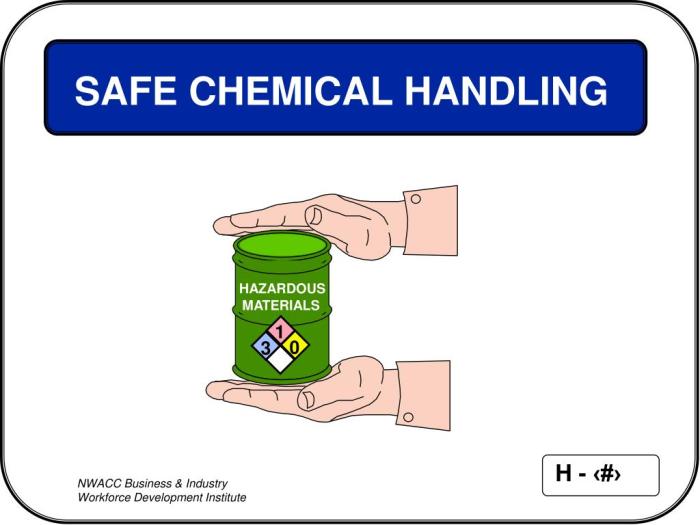
As we move forward in the realm of chemical safety, several emerging trends are shaping the landscape of chemical regulations and guidelines. These trends are influenced by advancements in technology, increasing public awareness, and a global push for sustainability. Recognizing these shifts is crucial for industries to adapt and comply with new standards while ensuring the safety of their operations.Technological advancements are playing a pivotal role in enhancing chemical handling and safety protocols.
Automation, data analytics, and the Internet of Things (IoT) are streamlining processes and improving monitoring capabilities. These technologies allow for real-time data collection and analysis, leading to more effective risk assessments and proactive safety measures. For instance, sensors can detect hazardous chemical leaks immediately, alerting personnel and enabling swift response to mitigate potential harm.
Emerging Trends in Chemical Safety Regulations
Several specific trends in chemical safety regulations are gaining traction across various industries. Understanding these trends allows organizations to stay ahead of compliance requirements.
- Increased Regulatory Scrutiny: Regulatory bodies are intensifying their oversight on chemical safety practices, leading to more frequent inspections and tighter compliance mandates.
- Focus on Sustainability: There is a growing emphasis on environmentally friendly chemicals and practices, pushing industries to adopt greener alternatives and reduce harmful emissions.
- Data-Driven Decision Making: The integration of big data analytics in chemical safety assessments enhances the accuracy of risk evaluations and compliance reporting.
- Global Harmonization of Regulations: Efforts are underway to align chemical safety regulations internationally, creating a more uniform framework for industries operating across borders.
- Public and Stakeholder Engagement: Increasing public interest in chemical safety is prompting organizations to engage more transparently with stakeholders, influencing regulation development.
Role of Technology in Improving Chemical Handling and Safety
Technology is transforming the way chemicals are managed and regulated. By leveraging innovative tools, industries can significantly improve their safety protocols and compliance measures.The use of advanced monitoring technologies is one such example. Smart sensors connected to central data systems can monitor chemical usage and detect anomalies in real-time. This capability minimizes the risk of accidents and allows for timely interventions.
Moreover, the implementation of machine learning algorithms enables predictive maintenance, identifying potential issues before they arise.Additionally, virtual reality (VR) and augmented reality (AR) are emerging as valuable training tools for chemical handling. These technologies provide immersive training experiences, allowing employees to engage in simulated scenarios that enhance their understanding of safety protocols without the associated risks of real-life training.
Impact of Stricter Regulations on Industries
Stricter regulations on chemical safety are likely to have significant implications for various industries. Organizations must adapt to these changes to maintain compliance and ensure operational safety.Stricter regulations often lead to increased operational costs, as companies may need to invest in upgraded safety equipment, training programs, and compliance processes. For example, the introduction of new reporting requirements can necessitate the implementation of advanced data management systems, which can be financially burdensome.Conversely, these regulations can also spur innovation within industries.
Companies that proactively adapt to regulatory changes may develop new products and services that align with stringent safety standards, providing a competitive edge. For instance, the demand for eco-friendly chemicals is rising, encouraging manufacturers to innovate in their formulations and production processes.In summary, the future of chemical regulation is characterized by increased scrutiny, technological advancements, and a push towards sustainability.
Organizations that embrace these trends will not only ensure compliance but also enhance their overall safety and operational efficiency.
Final Wrap-Up
In summary, adhering to regulations and guidelines for the safe handling and use of chemicals is not just a legal obligation but a moral imperative. The future of chemical safety will increasingly rely on enhanced regulations and the integration of new technologies, ensuring that the handling of hazardous materials is safer than ever before. Together, we can foster a culture of safety and awareness, ultimately leading to a healthier environment for everyone.
FAQ Guide
What are the key components of a chemical safety plan?
A chemical safety plan should include risk assessments, safe handling procedures, emergency response plans, training protocols, and compliance with applicable regulations.
How often should employees undergo chemical safety training?
Employees should receive initial training upon hiring and then refresher training annually or whenever regulations change or new chemicals are introduced.
What personal protective equipment (PPE) is necessary for chemical handling?
PPE requirements can vary but typically include gloves, goggles, lab coats, and respirators, depending on the chemicals being handled.
What steps should be taken in case of a chemical spill?
In case of a chemical spill, follow the emergency response plan, contain the spill if safe to do so, evacuate the area, and notify the appropriate authorities for cleanup.
What are the consequences of non-compliance with chemical regulations?
Consequences can include fines, legal action, increased inspections, or even closure of the business, depending on the severity of the violation.


